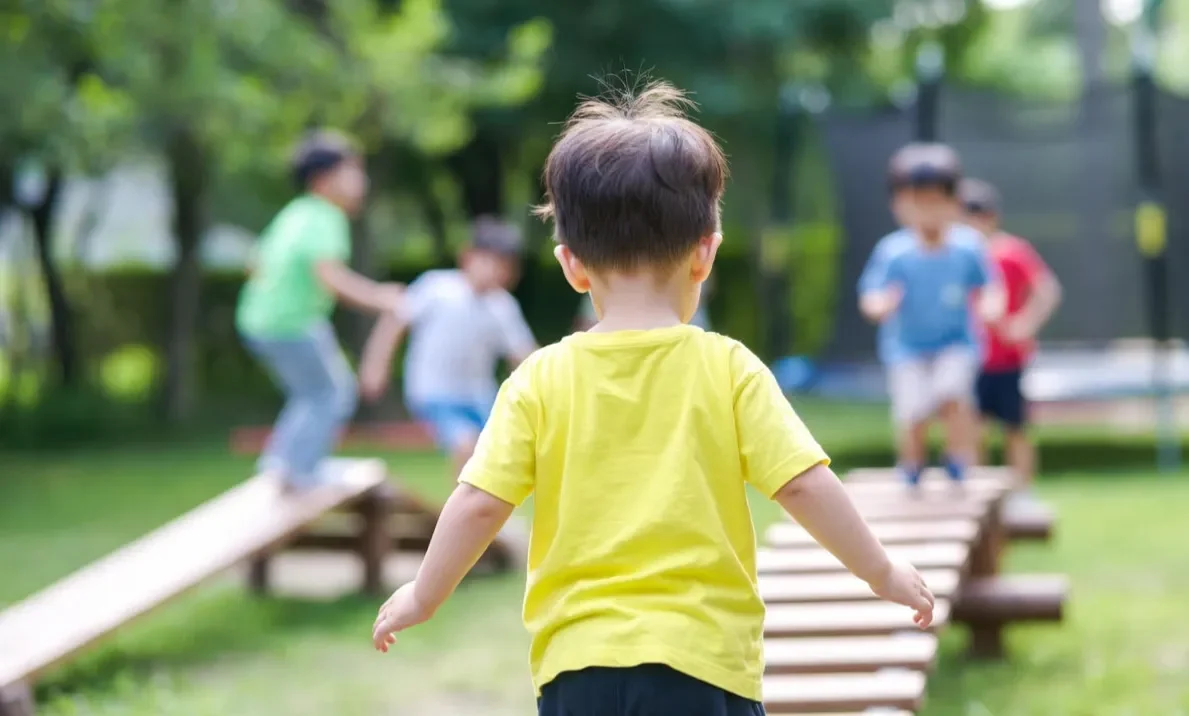
Have you ever watched a preschooler bounce off the walls at 10 a.m. and wondered, “Where does this energy come from?” You’re not alone! Preschoolers (ages 3–5) are bundles of nonstop movement, and channeling that energy into purposeful play is one of the best gifts we can give them. That’s where preschool gross motor activities come in — big-body movements that strengthen muscles, improve balance, boost confidence, and yes… finally tire them out (a little).
In this monster guide (yes, it’s over 2600 words because we love details!), you’ll find dozens of screen-free, energy-burning ideas you can use at home, in the classroom, or at daycare — many needing little or no equipment. Let’s turn wiggles into skills!
Why Preschool Gross Motor Activities Actually Matter (It’s More Than Just “Burning Energy”)
Gross motor skills involve the large muscles of the arms, legs, and torso. Between 3 and 5 years old, children are rapidly refining these skills — learning to run without tripping every three steps, jump with both feet, and balance like mini ninjas.
Research from the American Academy of Pediatrics shows that children who get at least 3 hours of physical activity spread throughout the day (including structured and unstructured play) have:
- Better attention spans in class
- Stronger bones and muscles
- Lower risk of obesity
- Improved sleep (hallelujah!)
- Higher self-esteem
So when we plan active preschool gross motor activities, we’re not just keeping kids busy — we’re literally building their brains and bodies.
10 No-Prep Jumping Games That Feel Like Pure Joy
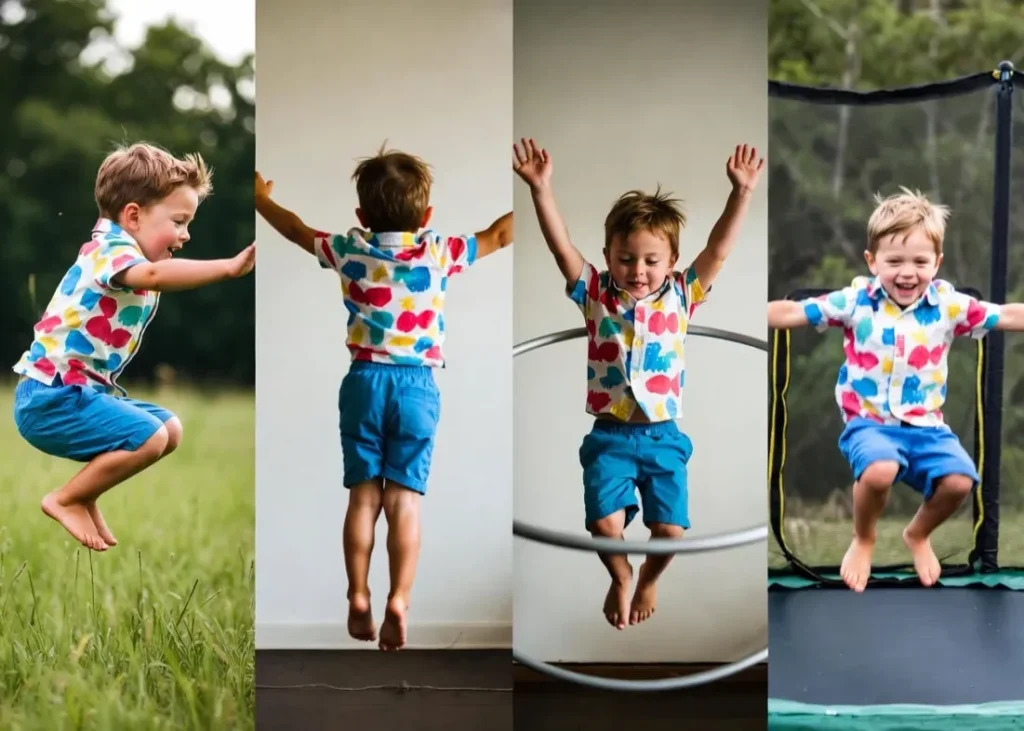
Jumping is one of the ultimate energy burners. Here are ten jumping games my own preschoolers and students beg for:
- Frog Jumps – “Ribbit” across the yard or hallway.
- Rocket Jumps – Count down 3-2-1 BLAST OFF! and leap as high as possible.
- Hot Lava Jumps – The floor is lava; only couch cushions are safe!
- Bunny Hops – Hands up like paws, hop forward, then backward.
- Star Jumps – Jump and spread arms and legs like a giant X (hello cardio!).
- Number Jumps – Call out a number; they jump that many times.
- Animal Action Jumps – Kangaroo, frog, bunny, flamingo (one-leg challenge!).
- Freeze Jump – Play music; when it stops, freeze mid-jump.
- Puddle Jumping (real or imaginary) – Great after rain or with chalk “puddles.”
- Hula Hoop Jumps – Lay hoops on the ground and leap from one to the next.
Real-life example: Last spring, 4-year-old Mateo refused to put shoes on for preschool. Solution? We turned the driveway into a “Superhero Training Course” with chalk hoops. Ten minutes of hula-hoop jumping later, shoes were on without a single tear.
Balance Beams: From DIY to Fancy (They’re Easier Than You Think)
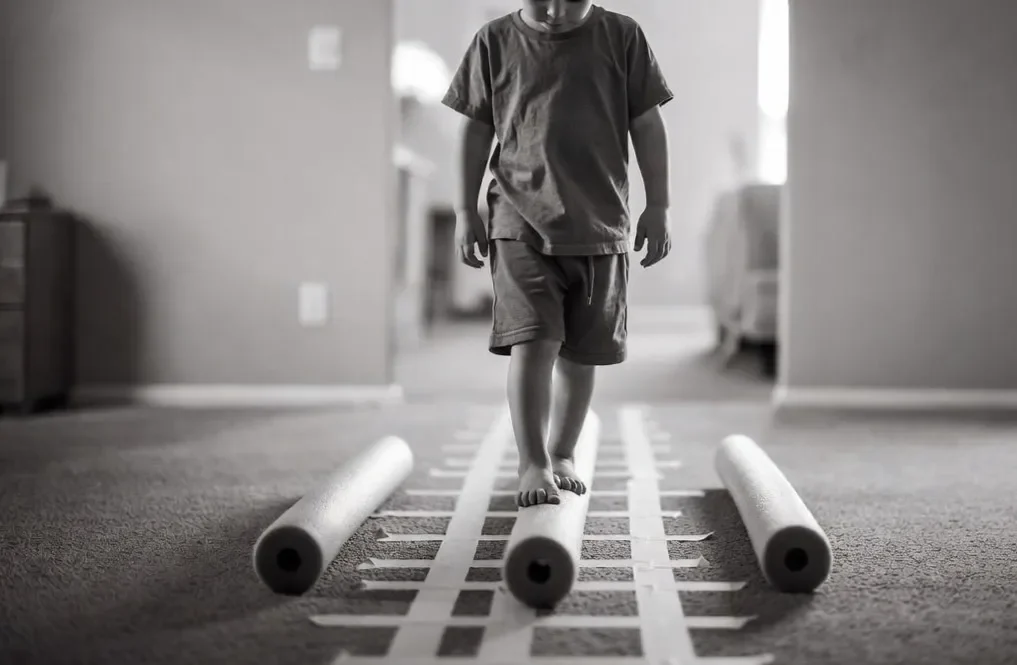
Balance beams are magical for developing core strength and focus. You do NOT need to buy the $200 gymnastics beam.
Budget-Friendly Balance Beam Ideas
| Option | Cost | Pros | Cons | Best For |
|---|---|---|---|---|
| Painter’s Tape Line | $0–$5 | Zero setup, works indoors | Not raised = less challenge | Beginners / rainy days |
| Pool Noodle on Floor | $2–$10 | Soft, colorful, easy to store | Rolls a little | Toddlers & young preschool |
| 2×4 Board on Grass | $10–$15 | Real height (3.5″), sturdy | Needs adult supervision | Backyard / confident kids |
| Curbs or Garden Edging | Free | Outdoor adventure | Weather dependent | Neighborhood walks |
| Gymnastics Folding Beam | $60–$120 | Adjustable height, folds up | Higher cost | Serious home gym setup |
Pro tip: Add challenges — walk carrying a bean bag on your head, walk backward, or walk while singing the ABCs sideways.
Outdoor Runs That Don’t Feel Like “Exercise”
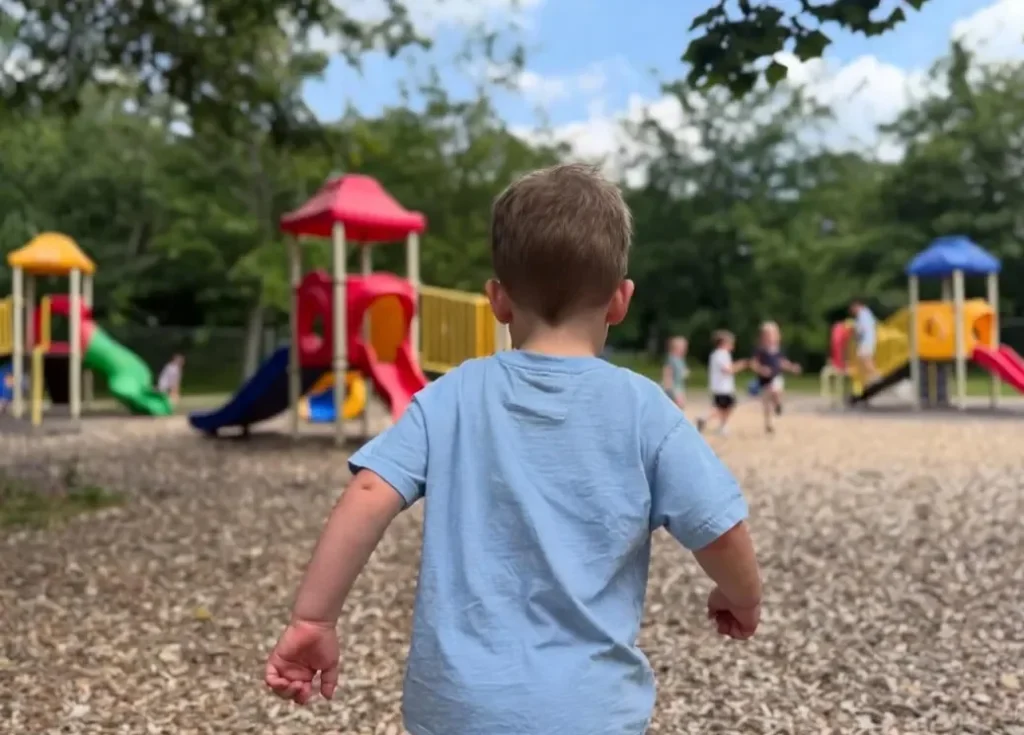
Preschoolers don’t need structured jogging (and honestly, they’d hate it). Turn running into play:
- Chase the Adult – You run slow on purpose. They LOVE catching you.
- Color Sprint – “Run and touch something red… now blue!”
- Animal Runs – Gallop like horses, scuttle like crabs, waddle like penguins.
- Follow the Leader Snake – Line up and weave around the playground.
- Red Light, Green Light – Classic for a reason.
- Obstacle Course Sprints – Under the picnic table, around the tree, through the tunnel.
Last month at pickup, I watched Miss Sarah turn the entire playground into a “Zombie Tag” run. Twenty exhausted, giggling preschoolers later… parent of the year award.
Indoor Gross Motor Activities for Rainy Days (or When You’re Stuck Inside)
Winter happens. Here are 15 ideas that work in a living room or classroom:
- Dance party with GoNoodle or Just Dance Kids on YouTube
- Masking-tape “river” to leap over
- Balloon volleyball (balloons move slowly = more swings!)
- Crab walk races
- Bear walk to the kitchen for snack
- Yoga for kids (Cosmic Kids Yoga is gold)
- Indoor bowling with plastic cups
- Simon Says with only movement commands
- Tunnel crawls (use a pop-up tunnel or chairs + blanket)
- Pillow mountain climbing
- Flashlight tag in a dark room
- Tape mazes on the carpet
- Laundry basket basketball
- Scarf tossing and catching
- Freeze dance with animal poses
How to Set Up a 10-Minute Daily Gross Motor Circuit (Step-by-Step)
Want something predictable the kids can look forward to? Here’s my go-to circuit that burns energy fast:
| Station # | Activity | Time | Equipment Needed |
|---|---|---|---|
| 1 | Frog jumps down hallway | 1 min | None |
| 2 | Balance beam (tape or board) | 1 min | Tape or board |
| 3 | Throw bean bags into basket | 1 min | Bean bags + basket |
| 4 | Animal walk (bear/crab) | 1 min | None |
| 5 | Jumping jack countdown | 1 min | None |
| 6 | Tunnel crawl | 1 min | Pop-up tunnel or chairs |
| 7 | Run in place “hot lava” | 1 min | None |
| 8 | Cool-down stretches | 2 min | Yoga mat optional |
Total: 10 minutes. Do it before screen time or meals and watch behavior transform.
Common Challenges (and How Real Parents & Teachers Fix Them)
“My child refuses to participate.” → Make it a choice: “Do you want to hop like a bunny or leap like a frog?” Choice = power = cooperation.
“We have no space!” → Use vertical space: jumping in place, wall push-ups, reaching high to tape stars on the wall.
“They get too wild and someone always gets hurt.” → Set clear “body boundaries” before starting. Use a visual stop sign. Practice “soft landings.”
“I’m exhausted just thinking about it.” → You don’t have to play every second. Set up stations and let them rotate independently while you sip coffee nearby.
Recommended for You:
- 10 Fun Preschool Activities to Boost Learning at Home
- Gentle Preschool Potty Training Timeline and Rewards
- Active Preschool Gross Motor Activities for Energy Burn
- Fun Preschool Letter Recognition Games and Printables
- Building Preschool Reading Readiness: Phonics Tips
Long-Term Superpowers Your Child Gains
Keep this up for a year and you’ll see:
- Dramatically better handwriting (stronger core = better pencil control)
- Fewer tantrums (exercise regulates emotions)
- Braver risk-taking (they’ve fallen off the couch 100 times and survived)
- Easier time sitting for circle time or meals
- Pride — “Look what my body can do!”
One of my former students, Lila, was terrified of the playground slide at 3 because she couldn’t climb the ladder. After six months of daily balance and climbing activities, she was the first one up the rock wall at 4. The smile on her face is still one of my favorite teaching memories.
Let’s Get Moving — Your Turn!
You now have more than 50 ideas, budget options, rainy-day backups, and a ready-to-go circuit. Pick ONE activity and try it today — I promise the giggles (and the glorious quiet that follows naptime) are worth it.
Which of these preschool gross motor activities are you most excited to try? Drop a comment below — I read every single one!
Frequently Asked Questions
How much gross motor play do preschoolers really need each day?
Experts recommend at least 3 hours total (including light, moderate, and vigorous), spread throughout the day. Even three 15-minute bursts make a huge difference.
Are jumping games safe for 3-year-olds?
Yes! Jumping is a natural milestone. Just ensure a soft landing surface (grass, carpet, mat) and supervise so they don’t jump off furniture unsupervised.
What if my child has low muscle tone or delays?
Many of these activities are actually therapeutic. Start with supported versions (holding hands on the balance beam) and celebrate tiny wins. Consult an occupational or physical therapist for personalized ideas.
Can we do gross motor activities in small apartments?
Absolutely! Tape lines, balloon games, yoga, and dance parties need almost zero space. Rearrange furniture for 10 minutes — it’s worth it.
My preschooler only wants screens. How do I transition to active play?
Use “screen-then-move” — “Five more minutes of tablet, then we do three rocket jumps together!” Gradually increase the movement portion. Make it non-negotiable but fun.
You’ve got this, superhero parent/teacher! Now go turn those wiggles into superpowers. 🚀